

Doctor-led · 7+ years dedicated to hair restoration · Bandar Sunway
Understand your hair loss before you treat it.
Most hair loss is treatable. Almost none of it is treatable well without a diagnosis. At Thrive, every plan begins with trichoscopy, a medical history and a clear explanation of what is actually happening to your scalp.
- Doctor-led by 2 hair-restoration doctors
- ABHRS & IBHRS certified
- ISHRS & AAHRS members
- Trichoscopy before any treatment
- 7+ years focused on hair restoration
- Tailored, stage-matched plan
- Years dedicated to hair transplantation & restoration
- 7+
- Doctors practising hair restoration exclusively
- 2
- International board credentials & memberships
- 4
- Diagnosis before any treatment is recommended
- 1
Years dedicated to hair transplantation & restoration
Doctors practising hair restoration exclusively
International board credentials & memberships
Diagnosis before any treatment is recommended
Our philosophy
Diagnosis first. Always.
Hair loss is a medical condition with several distinct causes, and they do not respond to the same treatment. A programme that helps androgenetic thinning will do nothing for an iron-deficient shed, and can waste a year of a scarring alopecia's most treatable window.
So we do the unglamorous part properly: history, bloods where indicated, magnified scalp imaging, and a named diagnosis you can understand. Only then do we discuss treatment — and only the treatment your diagnosis supports.

What happens at Thrive
A complete approach to hair restoration
Diagnosis first, then the right combination of medical therapy, regenerative support and surgery — chosen only if your pattern and stage support it.
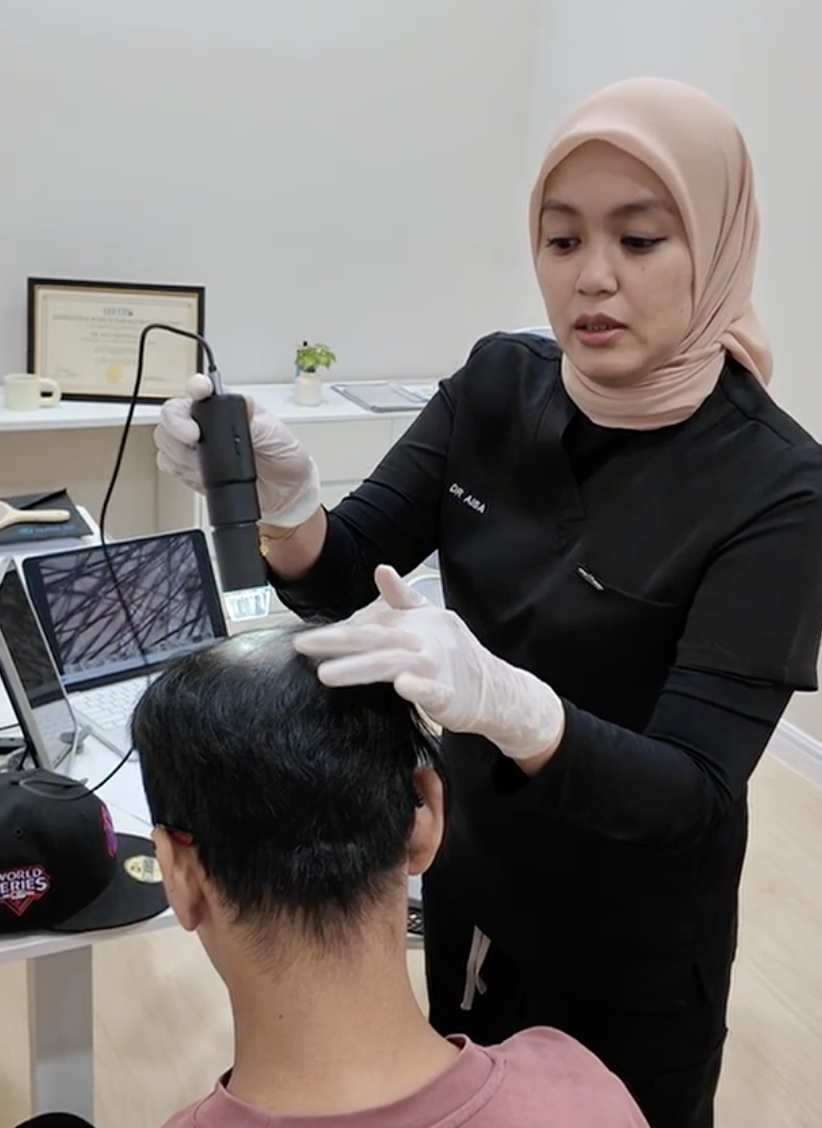
Hair Loss Assessment
A 45-minute medical consultation with a doctor. We take a detailed history, examine your scalp with trichoscopy, and order blood tests only where the story warrants them.
Book an assessment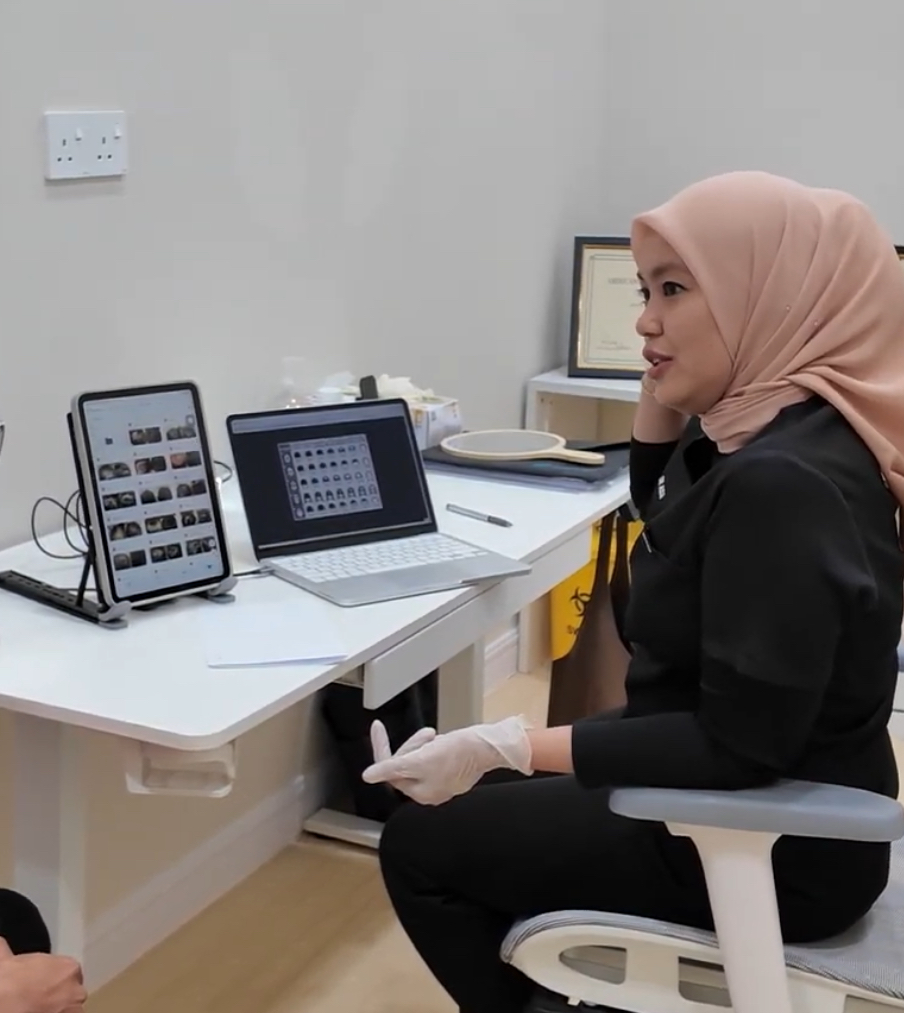
Hair Restoration Protocol
A doctor-prescribed protocol using clinically proven medications to slow hair loss progression, stabilise shedding and support regrowth in follicles that are still viable. Monitored with follow-up trichoscopy and adjusted to your response.
Ask about the protocol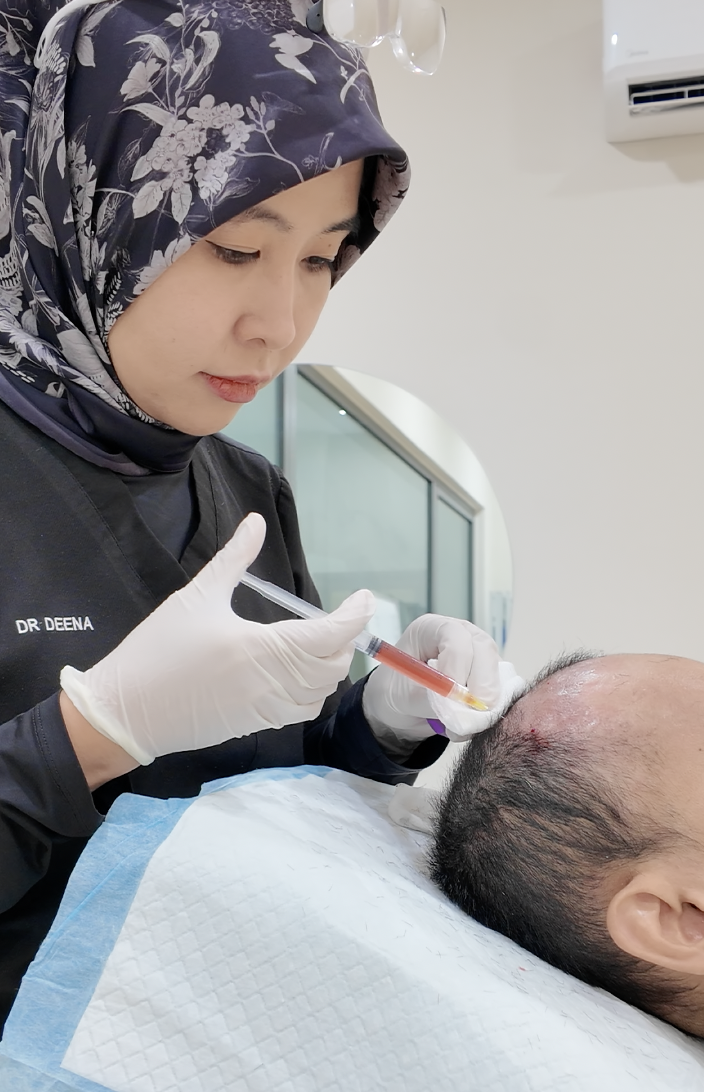
Regenerative Hair Boost Programme
A structured 6-month programme for thinning but viable follicles. PRP, microneedling and interval trichoscopy, designed to support growth rather than replace surgery.
See the programme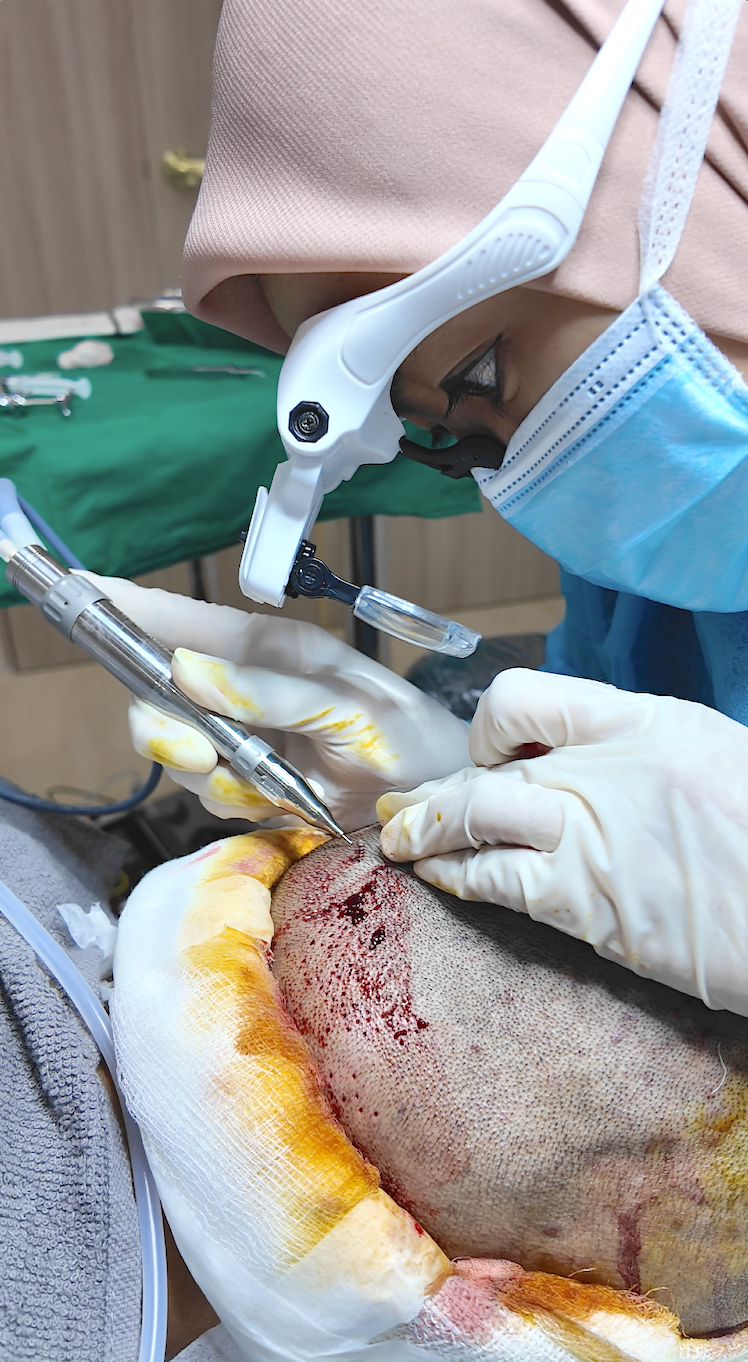
FUE Hair Transplantation
Surgical restoration by the same doctors who diagnosed you. We consider FUE only once the scalp is ready and the donor area supports a result worth keeping.
Ask about surgeryHow we work
Four standards we hold to
Trichoscopy before treatment
Every assessment begins with magnified scalp imaging and measured hair density, not a glance and a quote.
A written diagnosis
You leave the first visit knowing the pattern, the likely drivers and what each option can and cannot do for it.
Measured, not remembered
Standardised photography and repeat imaging at set intervals. Progress is compared against your own baseline.
Declined when unsuitable
If a treatment is unlikely to help your pattern, we say so. Not everyone who asks is a candidate.
The Thrive pathway
Foundation. Boost. Restore.
Three stages, in order. Where you enter depends entirely on what the assessment finds — many patients never need the third.
Foundation
Stabilise what you still have.
Evidence-based medical therapy, scalp health management and correction of the systemic factors — thyroid, iron, stress, medication — that quietly drive shedding. Nothing else works well until this is in place.
Boost
Support follicles that are thinning but alive.
Regenerative treatments such as platelet-rich plasma and microneedling, delivered as a structured programme with interval trichoscopy so we can see whether the follicle is responding.
See the programmeRestore
Replace what is genuinely lost.
Surgical hair transplantation, considered only where the donor area and diagnosis support it — and only after the foundation has been secured, so the result is worth keeping.
What we treat
Different causes. Different plans.
Male pattern hair loss
Receding temples, a thinning crown or a widening part with a family history behind it. Androgenetic alopecia is progressive — the question is how fast, and what stage you are at now.
Female pattern & diffuse thinning
A widening centre part, a thinner ponytail, more scalp visible under light. Often layered with iron deficiency, thyroid changes or postpartum shedding that needs treating in its own right.
Telogen effluvium
Sudden, heavy shedding two to three months after illness, surgery, crash dieting or acute stress. Frequently self-limiting — and frequently mistaken for permanent loss.
Scalp & inflammatory conditions
Seborrhoeic dermatitis, folliculitis and scarring alopecias. These change the treatment plan entirely, which is why they are ruled in or out before anything is prescribed.
Selected outcomes
Real patients, measured progress
Every response is different. These cases are shown to illustrate what a structured, diagnosis-led pathway can look like — not to promise the same result for everyone.
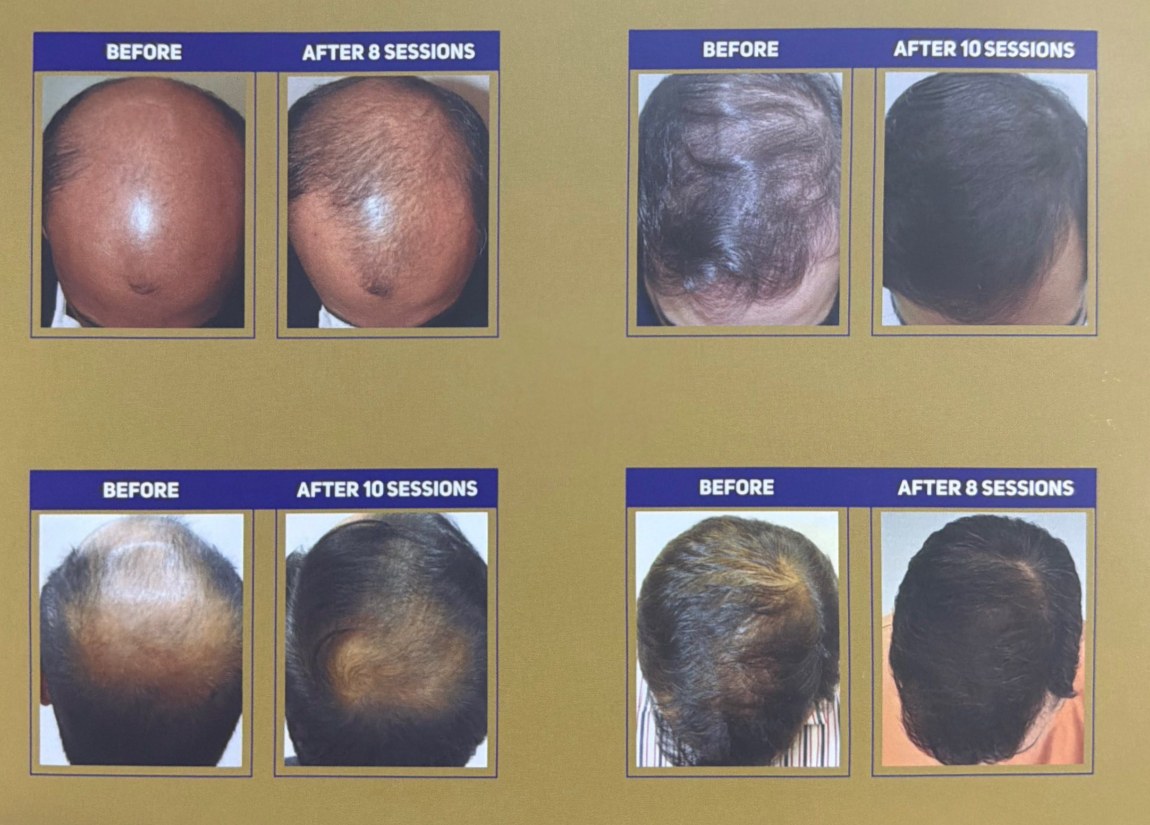
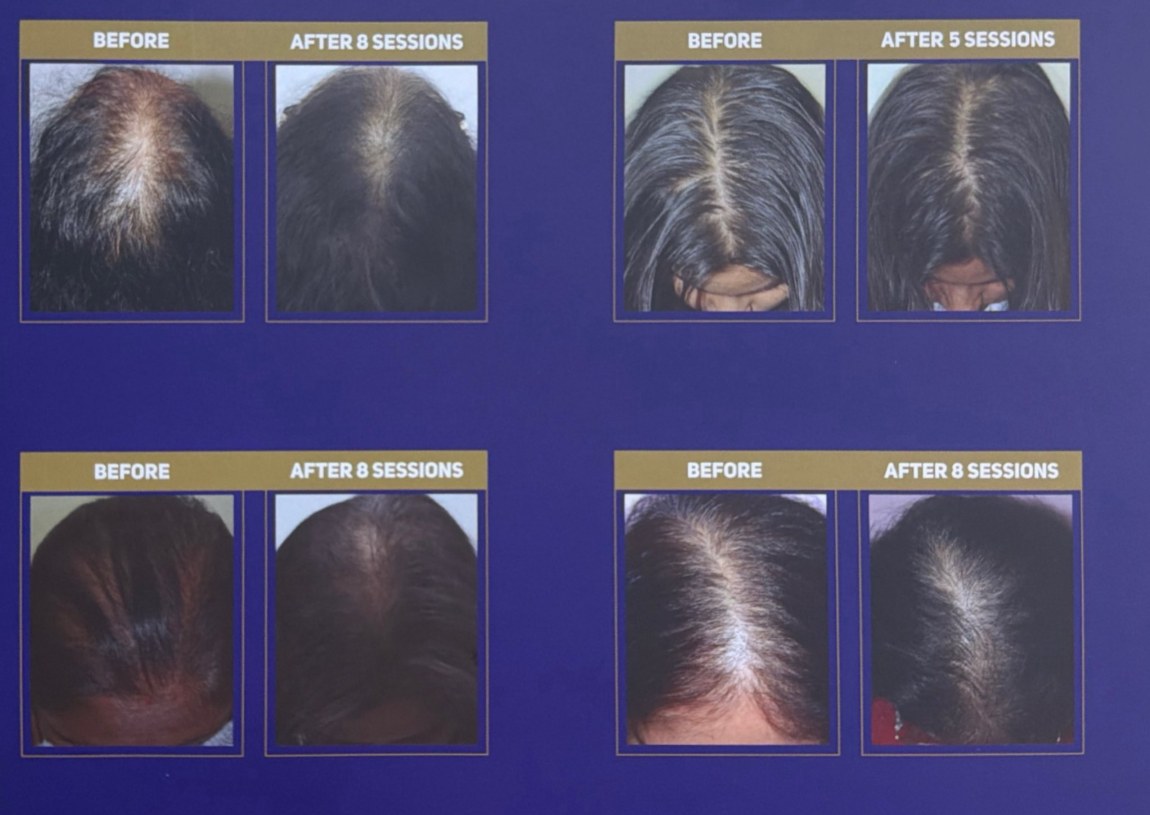
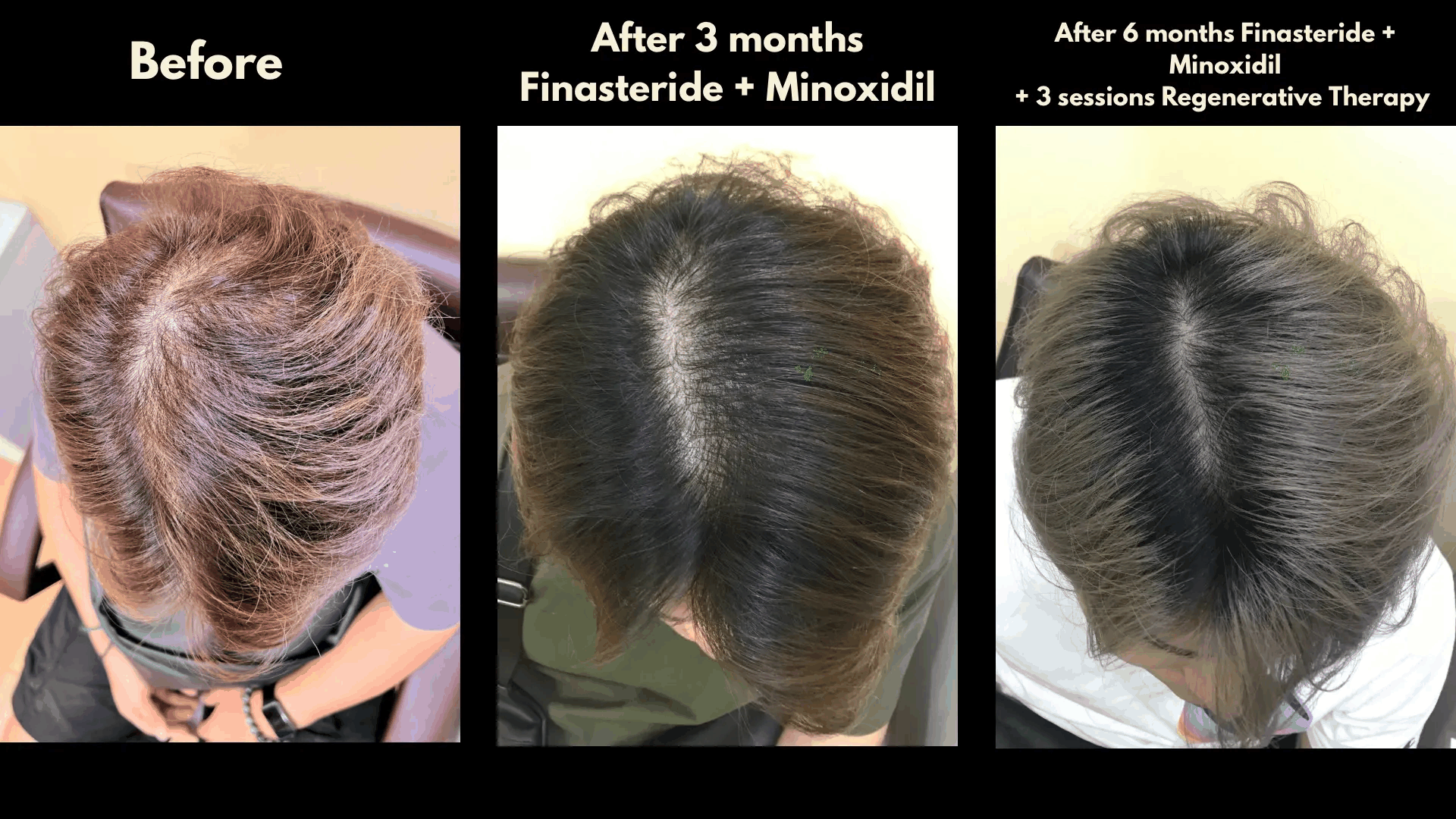
Outcomes depend on diagnosis, stage, adherence and individual biology. The cases shown are representative and do not guarantee similar results.
The doctors
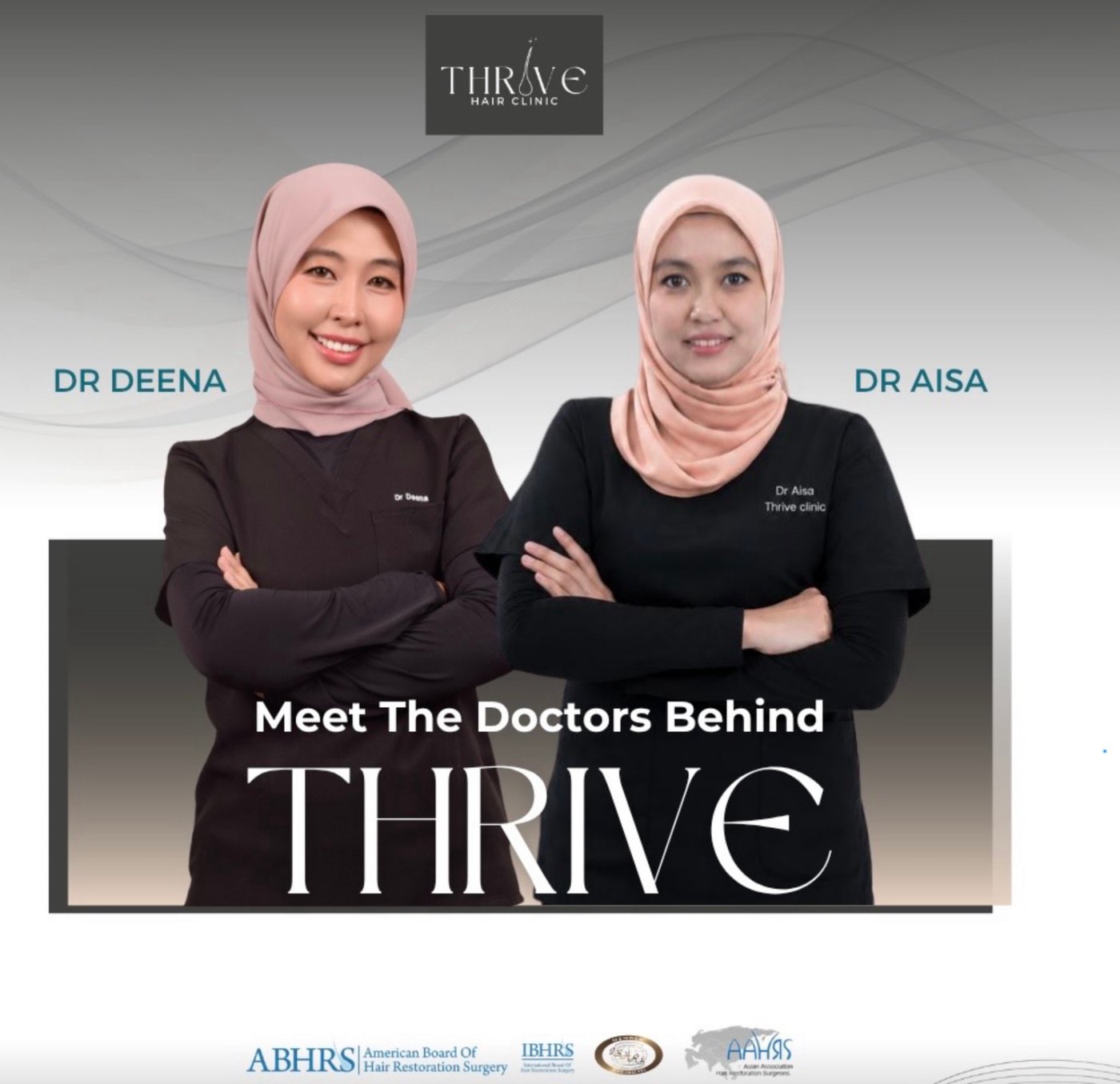
Meet Dr Deena and Dr Aisa.
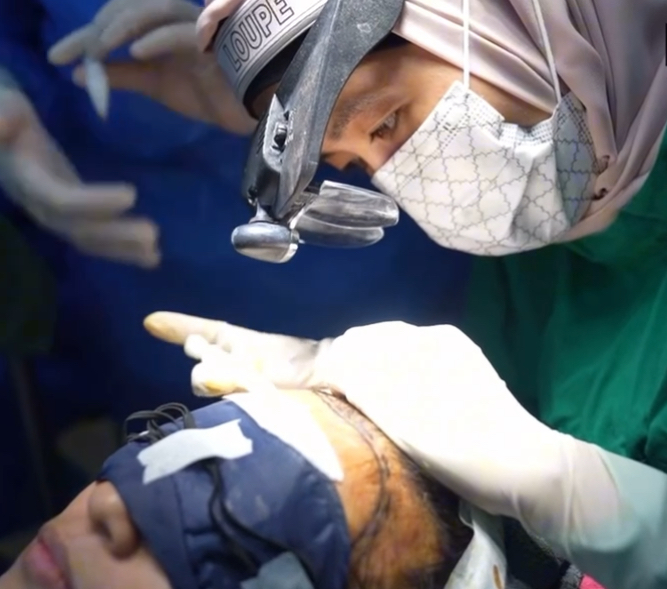
Thrive is led by two doctors with more than seven years in the hair transplant and hair restoration field — the same clinician who diagnoses you is the one who treats you.
Both practise hair restoration exclusively, hold credentials with the American and International Boards of Hair Restoration Surgery, and are members of the ISHRS and the Asian Association of Hair Restoration Surgeons — over seven years of focused surgical and regenerative experience, not a sideline to a general practice.
- Certified by the American Board of Hair Restoration Surgery (ABHRS)
- Certified by the International Board of Hair Restoration Surgery (IBHRS)
- Members of the International Society of Hair Restoration Surgery (ISHRS)
- Members of the Asian Association of Hair Restoration Surgeons (AAHRS)
- 7+ years in the hair transplant and hair restoration field
Your first visit
What the assessment involves
Around 45 minutes, unhurried, with a doctor.
- Step 1
History
Onset, pattern, family history, medication, nutrition, hormonal and stress factors.
- Step 2
Examination
Scalp examination and trichoscopy — magnified imaging of follicle calibre, density and miniaturisation.
- Step 3
Investigation
Blood tests where the history warrants them: iron studies, thyroid function, vitamin D and others as indicated.
- Step 4
Plan
A named diagnosis, the realistic outlook, and the options that fit it — including doing nothing.
Assessment findings and treatment recommendations are individual. Suitability for any treatment is determined by a doctor at consultation, and no outcome can be guaranteed.
Next step
Find out what is actually causing it.
Bring your questions. You will leave with a diagnosis, a realistic outlook and a plan you understand — whether or not you treat with us.