FUE Hair Transplantation
A hair transplant performed fully by board-credentialed surgeons
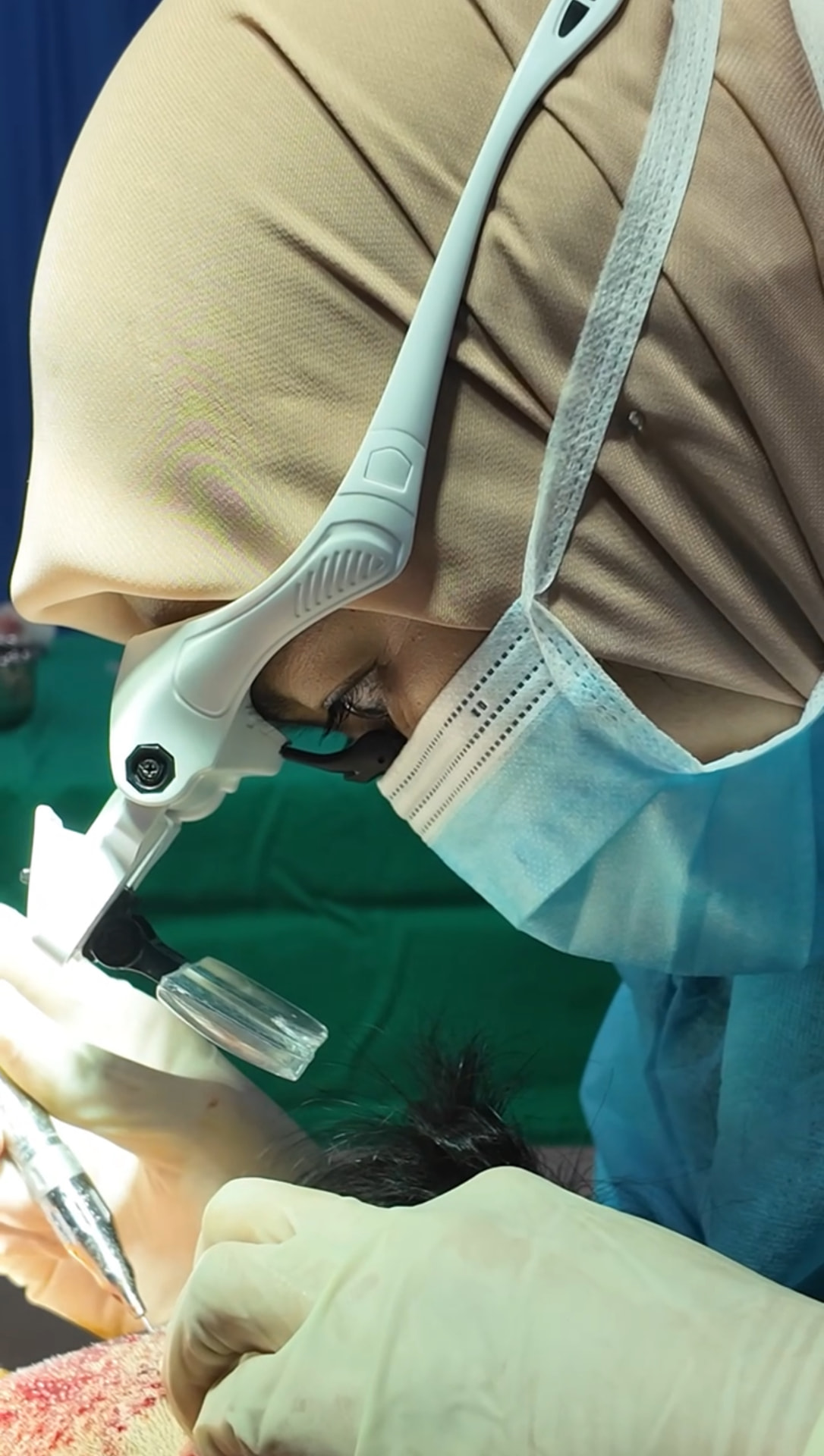
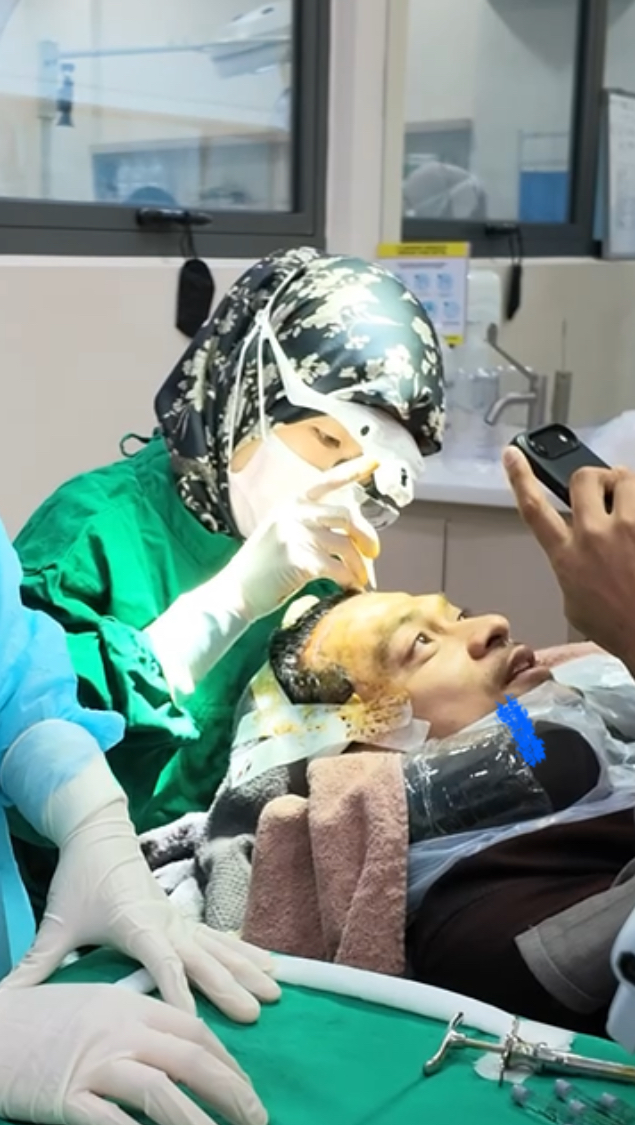
At Thrive Hair Clinic, every critical step of your FUE procedure — planning, FUE harvesting and direct hair implantation (DHI) — is carried out by Dr Deena and Dr Aisa, both Diplomates of the American Board of Hair Restoration Surgery (ABHRS). Nurses support the procedure and patient care.
Suitability & assessment
Is a hair transplant right for you?
Your assessment with the doctor helps plan the right approach and timing for your hair restoration — surgery, medical therapy, regenerative treatment or a personalised combination.
Stable, patterned hair loss
FUE works best when your hair loss pattern is established and your donor area is strong. If your loss is still rapidly progressing, we stabilise it medically first.
Adequate donor supply
The back and sides of the scalp must contain enough healthy follicles to cover the areas you want restored — without over-harvesting the donor zone.
Realistic expectations
A transplant redistributes hair; it does not create new follicles. We show you honestly what your donor supply can and cannot achieve.
Good general health
Certain medical conditions, medications and scalp disorders affect candidacy. These are screened during your consultation with the doctor.
The technique
FUE harvesting & DHI implantation
Follicular Unit Excision (FUE) removes individual follicular units from the donor area with a micro-punch, leaving no linear scar. We then use direct hair implantation (DHI), not slit implantation. Shaved and partial-shave FUE options depend on your graft numbers and how discreetly you need to recover.
Shaved FUE
The donor area (and usually the recipient area) is shaved short. This gives the surgeon maximum visibility and precision, allows higher graft numbers in a session, and is the most efficient approach for larger cases.
Partial-shave FUE
Only a section of the donor area is shaved, concealed by the surrounding longer hair. Suited to smaller sessions and patients who need to return to work or public life quickly with minimal visible sign of surgery.
Who does your surgery
The doctors' roles — start to finish
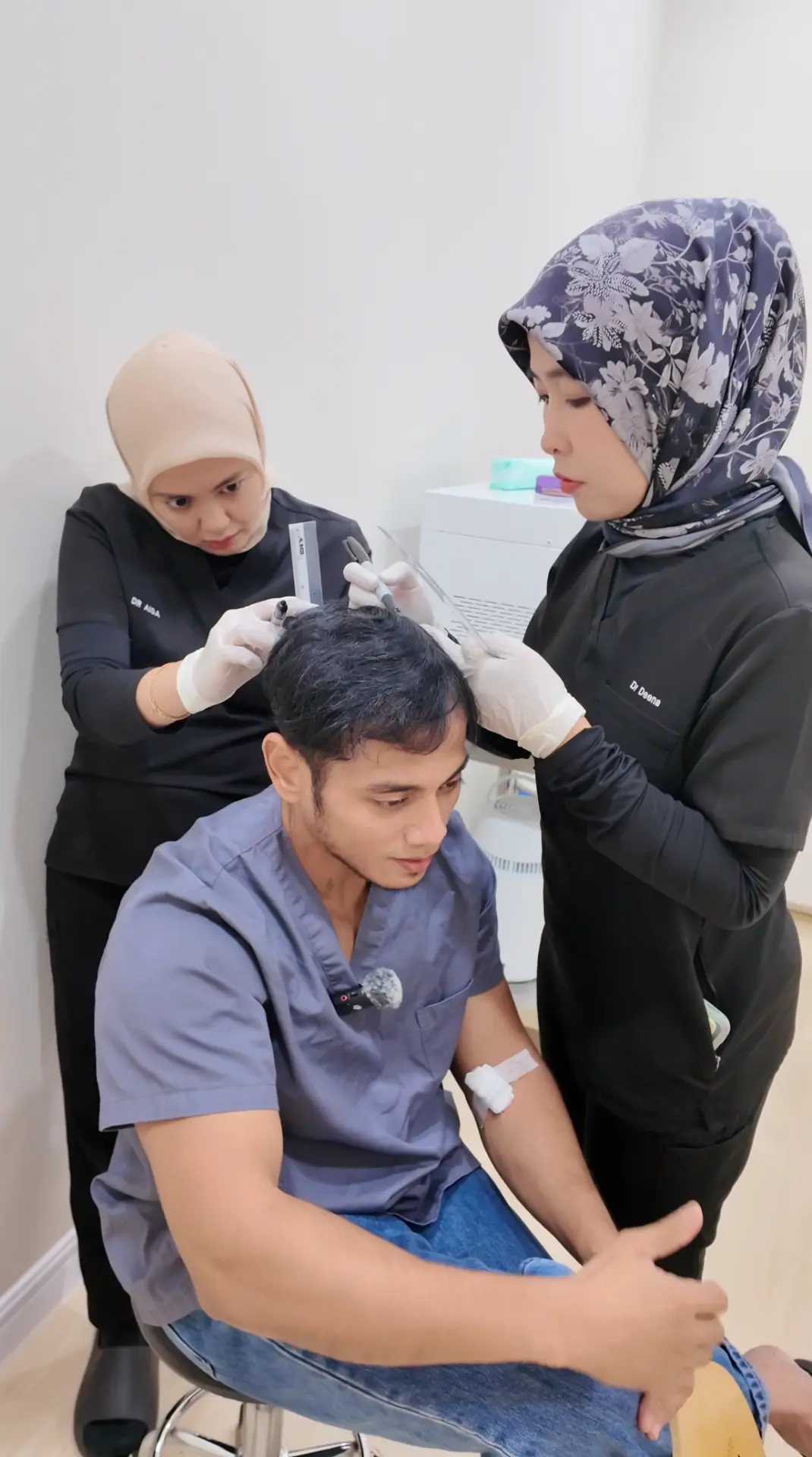
In many clinics, nurses perform most of the procedure. At Thrive, the doctors personally carry out every step that determines your result.
- Donor assessment and surgical planning
- Hairline design agreed with you before surgery
- Extraction of every graft
- Direct hair implantation (DHI) — controlling the angle, direction and density as each graft is implanted, without a separate slit-creation stage
- Post-operative review and follow-up
Design before surgery
Hairline design and donor planning
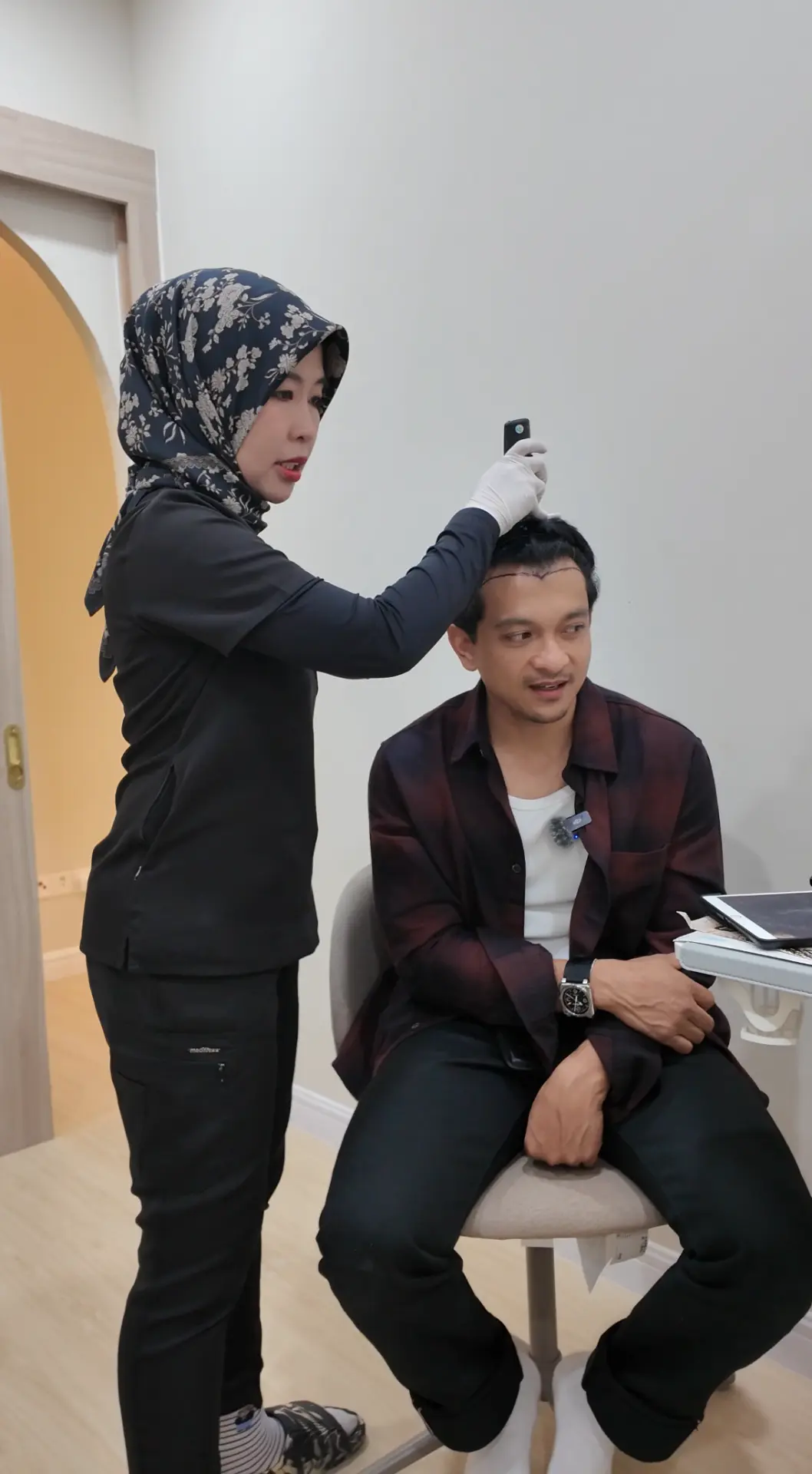
A natural result is decided before the first graft is extracted. Your hairline is designed for your face, age and likely future loss — and your donor area is mapped so it is never over-harvested.
A hairline that ages well
We design for how you will look at 50, not just next year — an age-appropriate hairline with irregular, natural micro-detail at the front edge.
Measured donor density
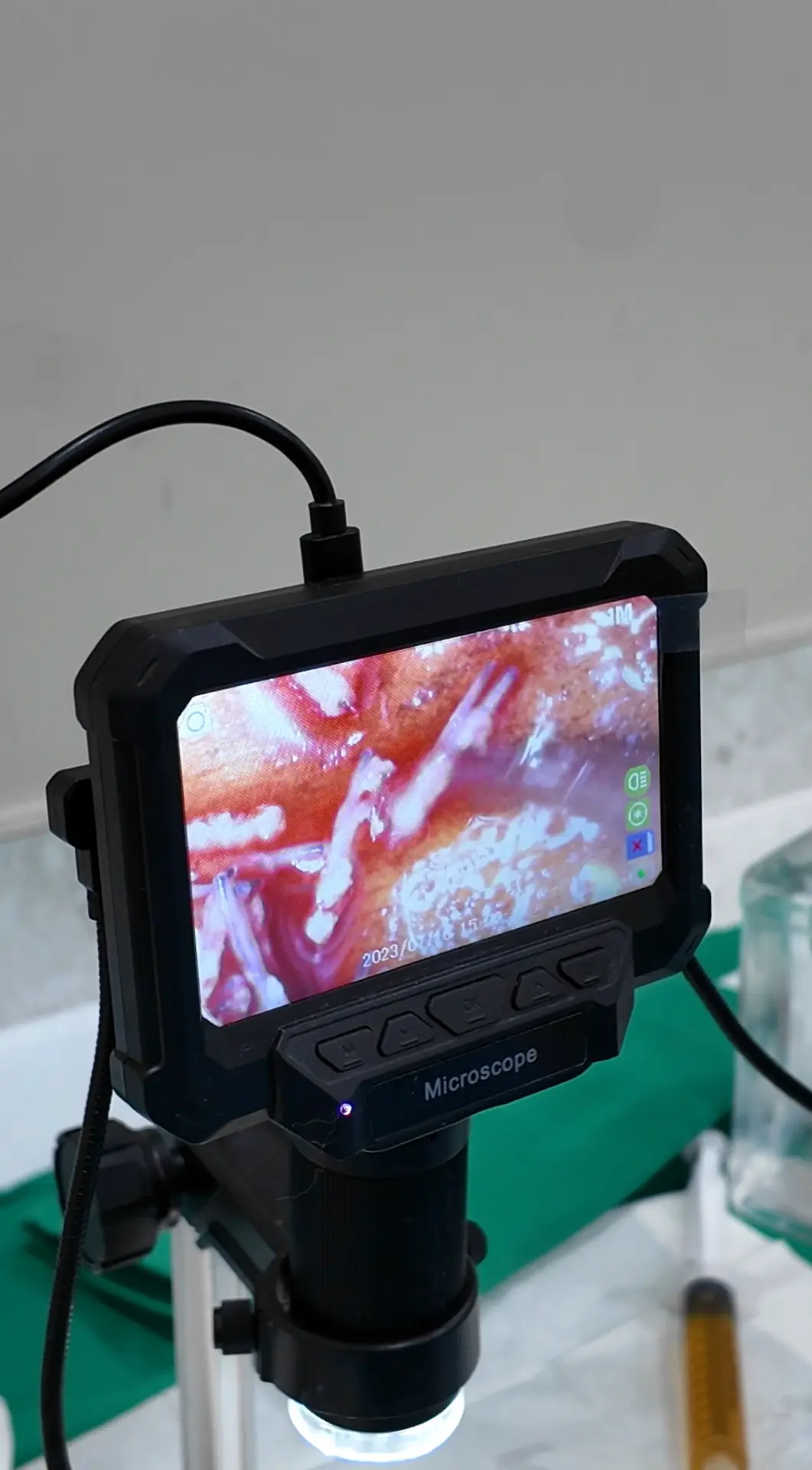
Trichoscopy measures how many grafts your donor area can safely give, so extraction is spread evenly and the donor zone keeps a natural appearance.
A written plan
Graft numbers are allocated zone by zone and agreed with you in advance — the number you are quoted is the number planned, with no surprises on the day.
Procedure, recovery & follow-up
Your procedure journey
- 01
Consultation & trichoscopy
The doctor examines your scalp under trichoscopy, measures donor density, maps your pattern of loss and confirms whether FUE is the right option — or whether medical or regenerative treatment should come first.
- 02
Design & planning
Your hairline is drawn and agreed together. Graft numbers are allocated across zones, and donor extraction is planned to preserve your donor area for the future.
- 03
Procedure day
Under local anaesthesia, the doctor harvests follicular units one by one using FUE. The exact hair count is known after harvesting. The doctor then uses direct hair implantation (DHI) to implant each graft at the planned angle and direction, rather than using slit implantation. You rest comfortably between phases.
- 04
Early recovery
Most patients return to desk work within a few days. Scabs settle over the first week or two. You receive written aftercare instructions and direct access to the clinic for any concern.
- 05
Growth & follow-up
Transplanted hairs typically shed in the first weeks, then begin regrowing from around month 3–4, with results maturing over 12–18 months. We review your progress at scheduled follow-ups.
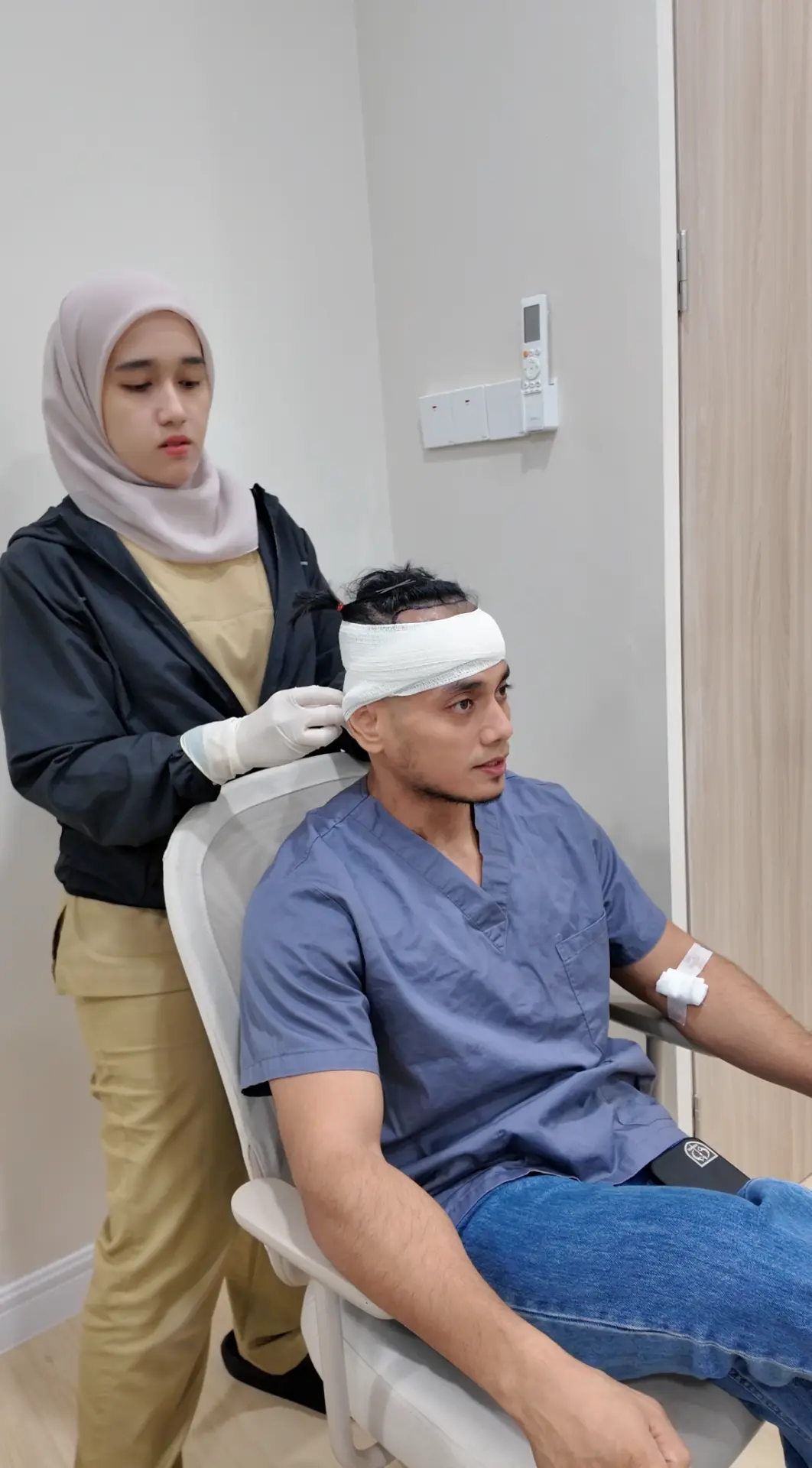
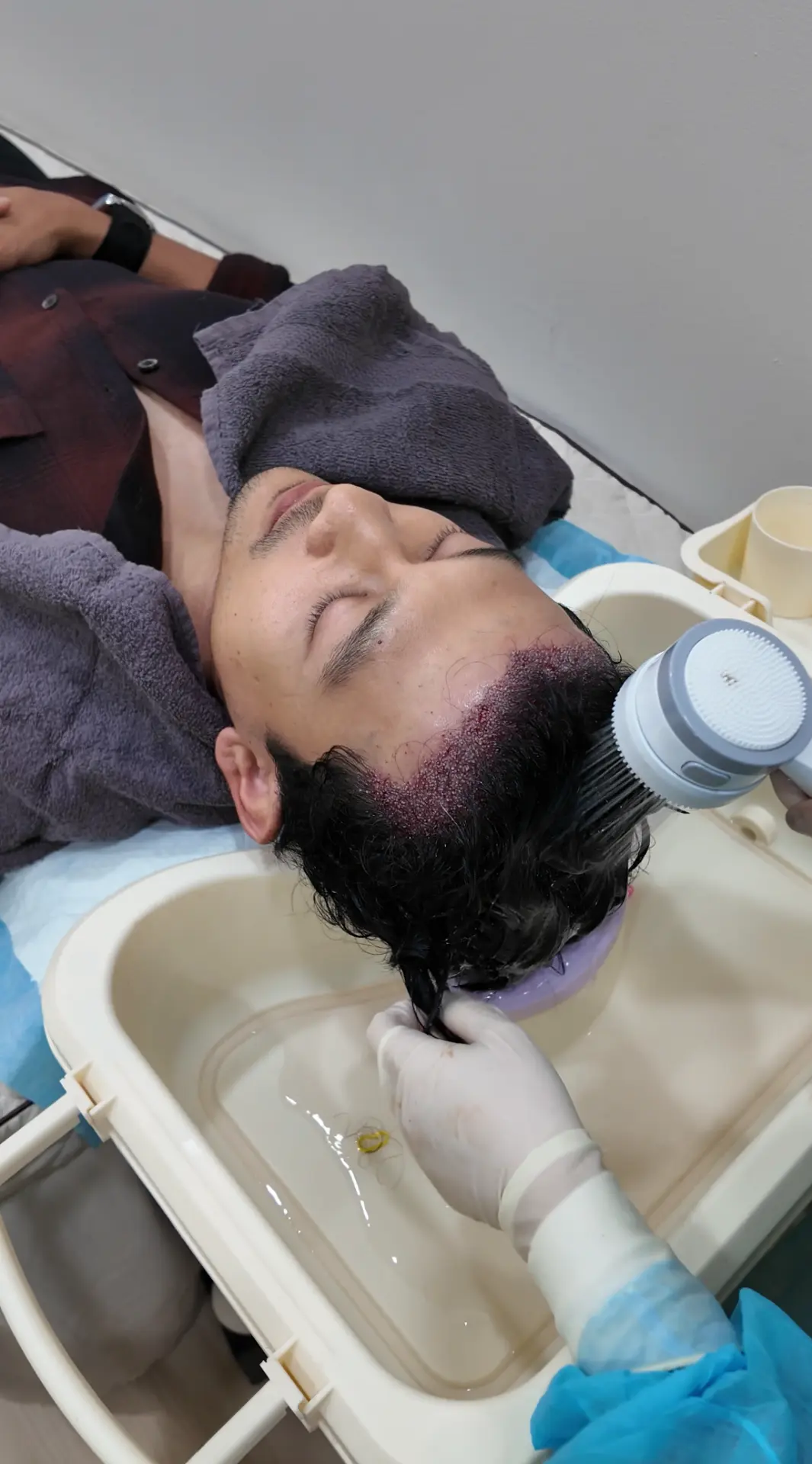
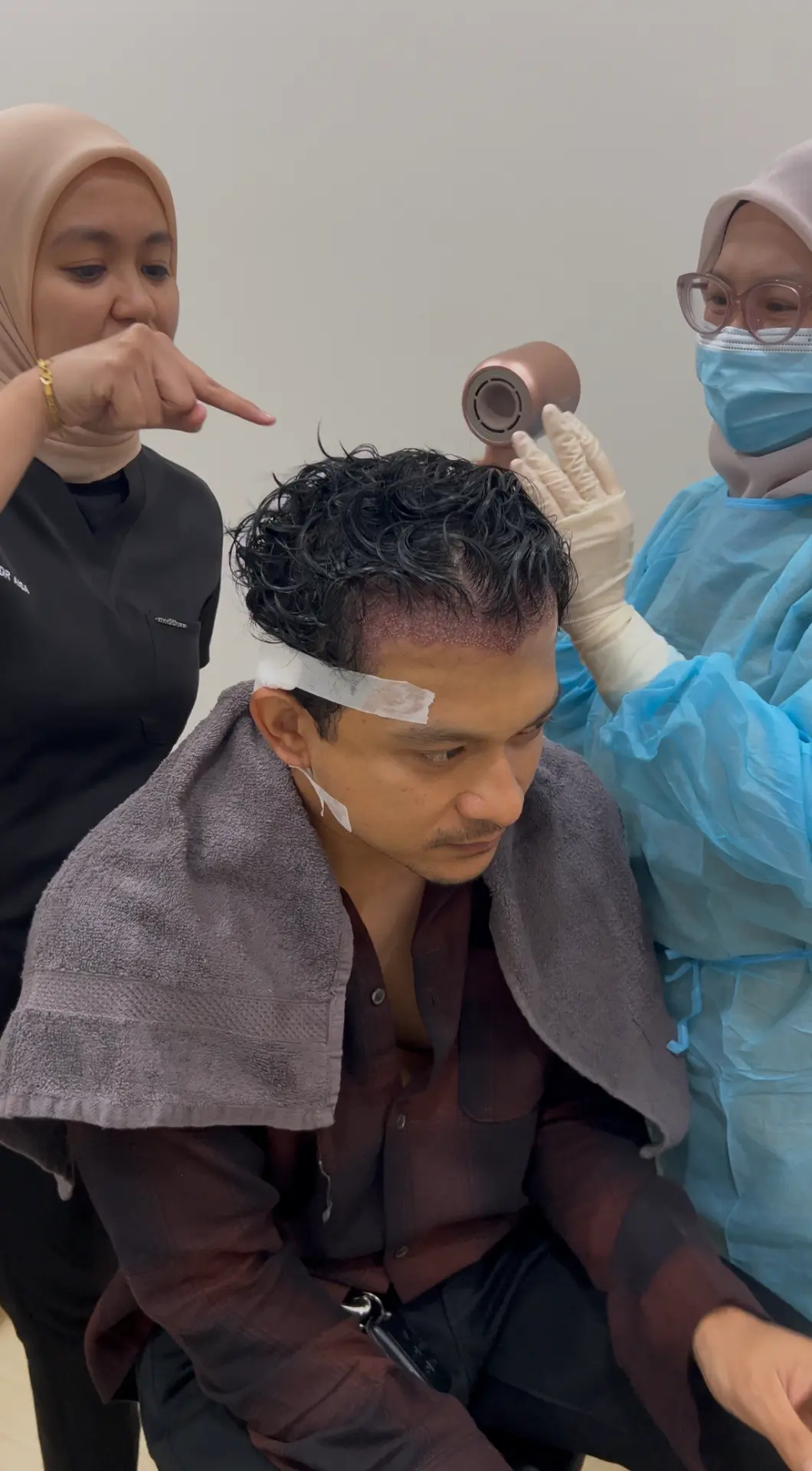
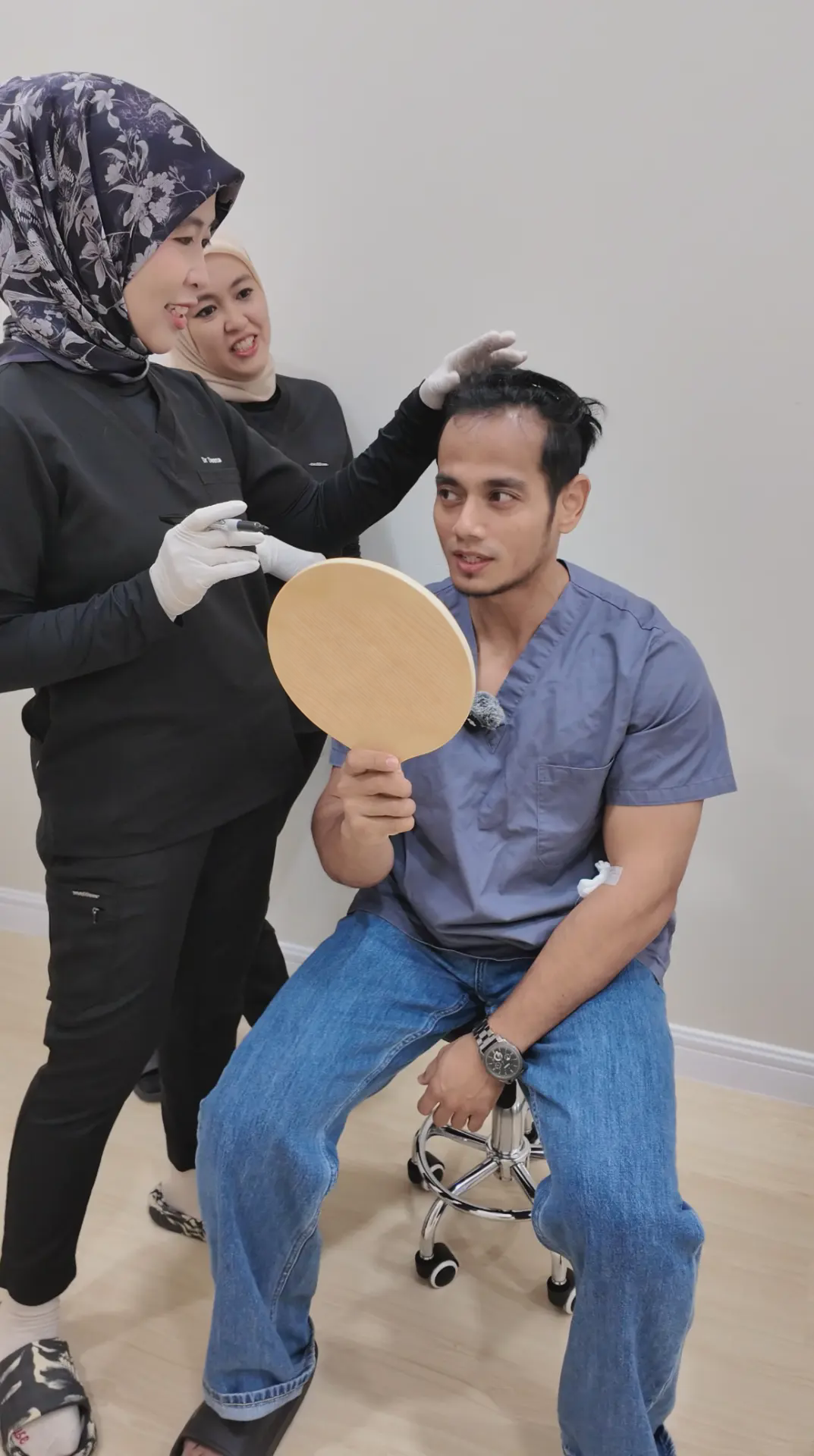
Real Thrive patients shown with consent, from procedure day through early recovery. Individual healing and results vary.
Honest medicine
Risks and limitations
A hair transplant is surgery. We believe you should hear the limitations from us, not discover them afterwards.
- Temporary shedding of existing hair (shock loss) in the recipient or donor area
- Swelling, redness, crusting and itching in the first days
- Small dots of scarring in the donor area, usually concealed by surrounding hair
- Variable graft survival — not every transplanted graft grows
- Continued loss of your native, non-transplanted hair over time
After the procedure
Ongoing care
A transplant restores the area treated; it does not stop pattern loss elsewhere. Protecting your result is a long-term plan, not a single day.
- Scheduled follow-up reviews with the doctor
- Medical therapy to protect your native hair, where indicated
- Regenerative support (such as the Hair Booster Programme) where appropriate
- Direct WhatsApp access to the clinic during recovery
Pricing, explained properly
Hairs are not grafts — know what you're buying
Hair grows in natural groups of 1–4 hairs called grafts (follicular units). We harvest and implant per graft, but quote and charge per hair. The exact hair count is known after harvesting, and any hairs beyond your quoted count are included free.
1 graft
1–4 hairs
Each graft is a complete follicular unit. The number of hairs within each graft varies; the exact total is known after harvesting.
Your quote
Per hair
We quote and charge per hair, not per graft. Your consultation provides an estimate; your exact hair count is known only after harvesting.
For example, if your quote is for 4,000 hairs and 2,000 harvested grafts contain 4,300 hairs, the extra 300 hairs are included free — no additional charge.
Instalments
EzyPay
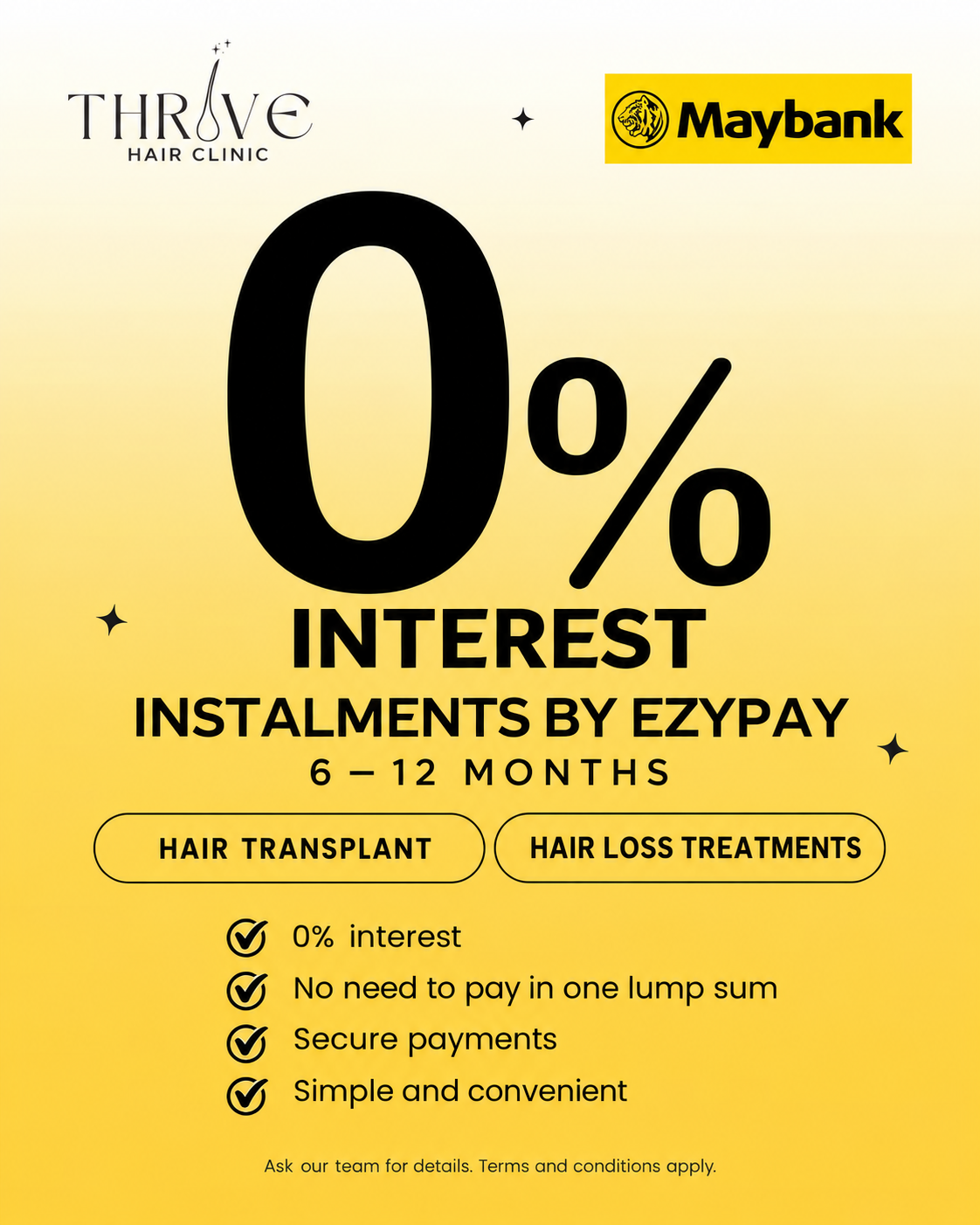
0% interest instalments over 6–12 months for hair transplant and hair loss treatments. Ask our team for details. Terms and conditions apply.
Your per-hair rate and estimated hair count are provided in writing at consultation. The exact hair count is known after harvesting — no two plans are the same. Extra hairs beyond your quoted count are never charged.
Maybank EzyPay
0% interest instalments
Spread your payments over 6–12 months for hair transplant and hair loss treatments, rather than paying in one lump sum.
Ask our team for details. Terms and conditions apply.
What your package includes
One plan, everything covered
- Full consultation and trichoscopic assessment with the doctor
- Hairline design and donor planning session
- FUE harvesting and DHI implantation, performed fully by our credentialed surgeons
- Local anaesthesia and all consumables on the day
- Post-operative medication and aftercare kit
- Scheduled follow-up reviews
Questions
Frequently asked questions
What is the difference between a hair and a graft?
A graft (follicular unit) is the natural grouping in which hair grows — each graft contains 1 to 4 hairs. We harvest and implant per graft, but we quote and charge per hair. The exact hair count is known only after harvesting. For example, if your quote is for 4,000 hairs and 2,000 harvested grafts contain 4,300 hairs, the extra 300 hairs are included free — no additional charge. When comparing clinics, always ask whether the quote is per graft or per hair.
How many grafts will I need?
It depends on the area to be covered, your hair characteristics and your donor density. This can only be estimated responsibly after a trichoscopic assessment — we measure first, then quote.
Does the procedure hurt?
The procedure is done under local anaesthesia, so you should feel pressure rather than pain once the area is numb. The anaesthetic injections themselves sting briefly. Most patients describe the day as long but comfortable.
When will I see results?
Transplanted hairs usually shed within the first few weeks — this is normal. New growth typically begins around month 3–4, becomes clearly visible from month 6, and continues to thicken and mature up to 12–18 months.
Will I need to shave my head?
Not necessarily. We offer both shaved FUE and a partial-shave approach where the shaved donor zone is hidden under your existing longer hair. The right option depends on your graft numbers and lifestyle; we discuss this at consultation.
Is a hair transplant permanent?
Transplanted follicles are taken from the permanent zone and generally keep their resistance to pattern loss. However, your existing native hair can continue to thin, which is why we usually pair surgery with ongoing medical therapy to protect the rest of your hair.
Can I pay by instalments?
Yes. Maybank EzyPay offers 0% interest instalments over 6–12 months for hair transplant and hair loss treatments. Ask our team for details. Terms and conditions apply.
Find out what your donor area can achieve
Book a consultation with our doctors. We measure first, then tell you honestly whether a transplant — and how many grafts — is right for you.
Individual results vary. A hair transplant is provided only after a medical consultation and is subject to clinical suitability. This page is for general information and is not a substitute for personalised medical advice.